BREM

BREM

TBA
21,107 Views
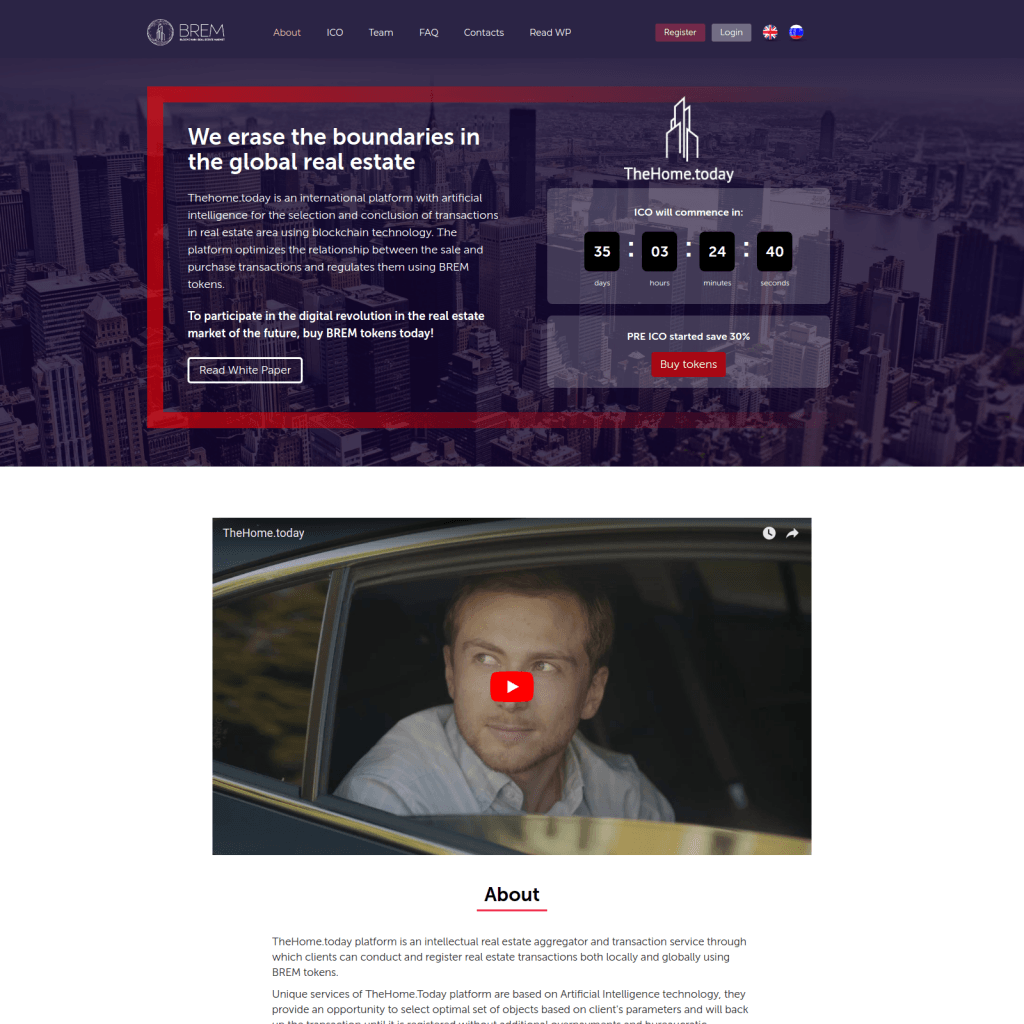
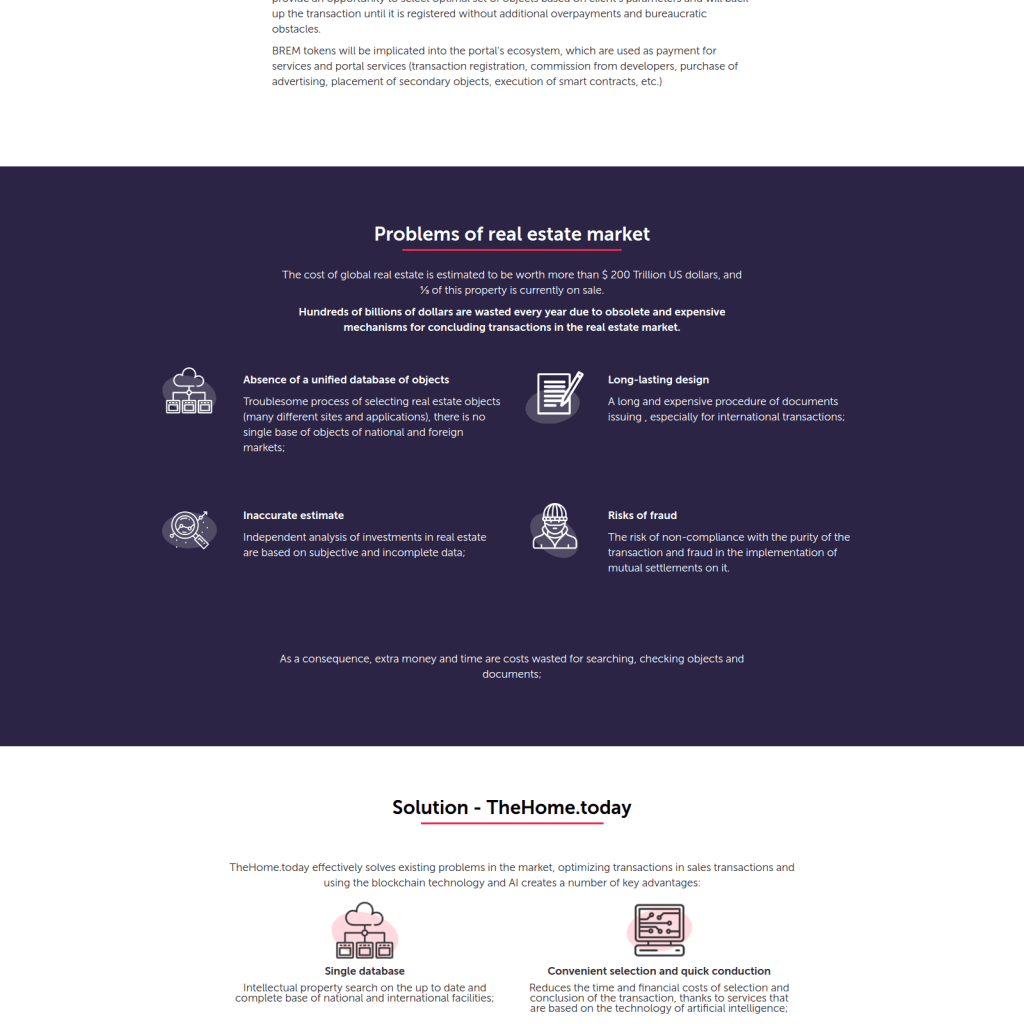
Thehome.today is an international platform with artificial intelligence for the selection and conclusion of transactions in real estate area using blockchain technology. The platform optimizes the relationship between the sale and purchase transactions and regulates them using BREM tokens.
7.6
TOTAL SCORE
6.9
ICO PROFILE

(weight: 45%)

10
TEAM PROOF

(weight: 20%)

Get widget
General
Website: Visit
White paper: Read
Dates: TBA
Token info
Ticker: BREM
Platform: Ethereum
Token Type: ERC20
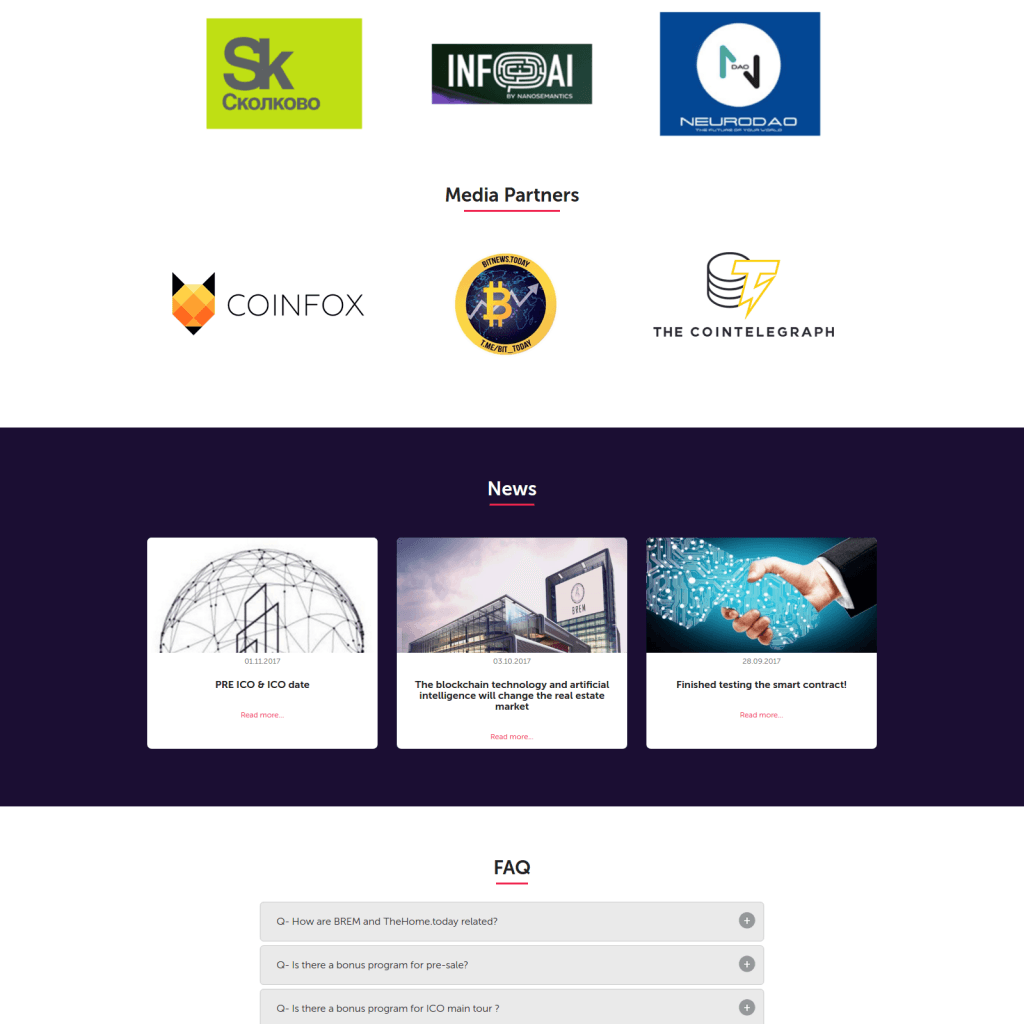
Available for sale: 11,500,000 BREM (46%)
Financial
ICO Price: 1 BREM = 0.8 - 1 USD
Accepting: ETH
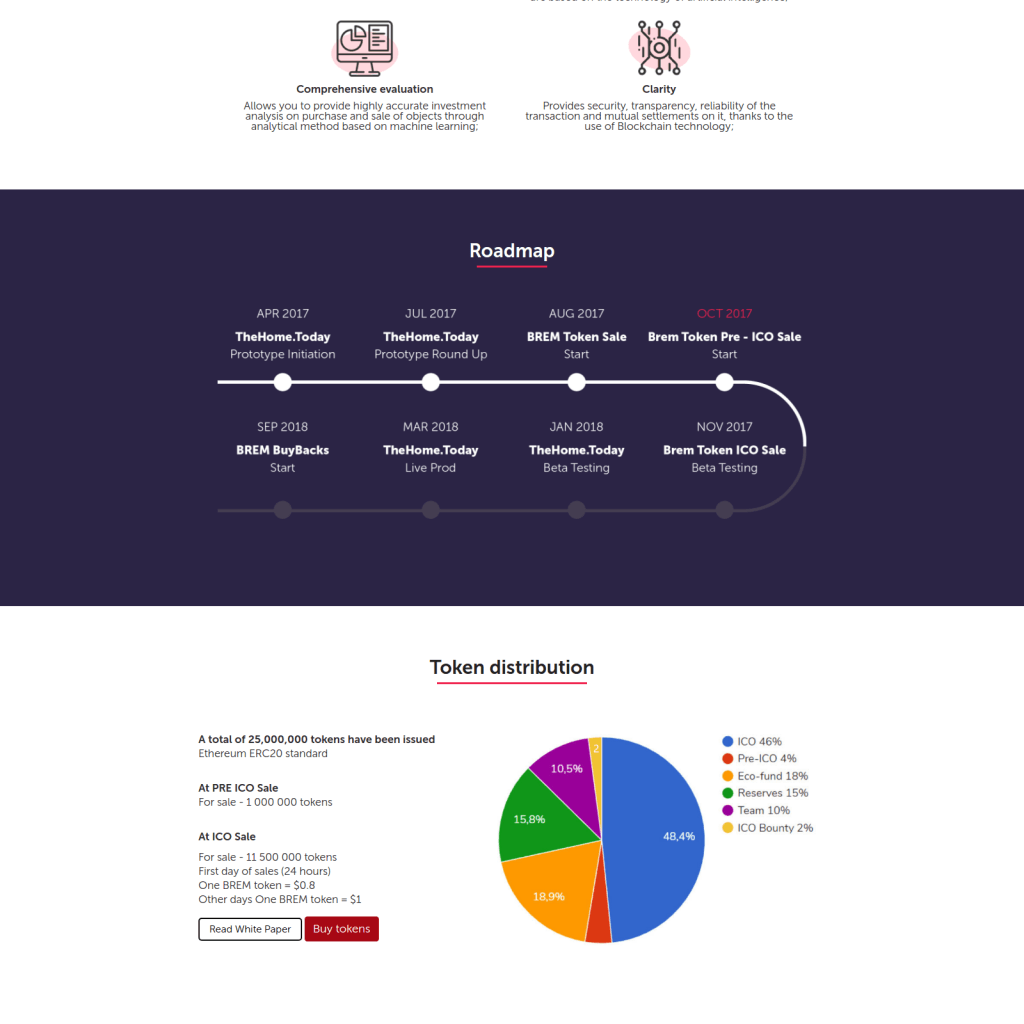
April 2017
Prototype Initiation
July 2017
Prototype Round Up
August 2017
Token Sale
October 2017
Pre-ICO
November 2017
ICO Sale Beta Testing
January 2018
Beta Testing
March 2018
Live Prod
September 2018
Start
Screenshots taken on 8 Feb 2018
Sergey Sevantsyan
CEO
Participates in a number of projects
Julia Sergeeva
Participates in a number of projects
Irina Aksuchenko
Participates in a number of projects
Irina Sigal
Participates in a number of projects
Fedor Selivanov
Participates in a number of projects

Advisors (1)

Arseniy Strizhenok
Participates in a number of projects
HEIGHT - 0px
WIDTH - 0px
PUT THIS CODE TO YOUR WEBSITE
ICO List
Other Interesting ICOs
Upcoming
Xsure
Xsure is a decentralized risk management platform that facilitates real-time communication between insurance providers and the end customer. With the help of machine learning and blockchain trust-less governance technologies we have managed to eliminate third parties from the whole insurance life-cycle and turn it into a dynamic process instead of a static one.
Upcoming
DINO
In blockchain world, there is a huge knowledge gulf between non-computer professionals from different industries and smart contract development. The DINO Platform aims to address this problem with its proprietary technology, a cloud-based Graphical User Interface (GUI) smart contract Integrated Development Environment (IDE). Leveraging the technology of the DINO Platform, users can build their smart contracts with visualised logic flows. More than just a smart contract IDE, the DINO Platform is intended to build a smart contract ecosystem together with developers all over the world. In the smart contract market, developers may build and design smart contract templates and sell them to the general public.
Upcoming
RewardsToken
Rewards.com is introducing a global marketplace that brings together over 100,000,000 products and 7,000 merchants, including restaurants, travel, entertainment and retail. This marketplace will allow customers to earn and redeem, what we call RWRD tokens, at any participating merchant or be traded on the exchanges. We believe this solution will transform loyalty by taking cryptocurrency mainstream, building a healthy and strong token economy and restoring true value to the consumer reward.
Upcoming
INVERSE
INVERSE is a DeFi based platform that provides an array of smart-contract features with integrated time-based options. Users have the opportunity to speculate on the drop in value of a suite of Defi coins by utilizing the multiple 'tracking vaults' on the platform. XIV, the protocol's native token, is used to unlock these vaults, and then staked within these vaults for no more than 7 days. As their name implies, these vaults track the real-time price movements of select DeFi tokens (i.e. COMP, AAVE, UNI, YFI). After 7 days, if the value of the DeFi asset being tracked has dropped by a certain percentage, the user will gain a significant percentage yield on the amount of XIV held within the tracking vault. If the price of the DeFi asset does not drop in value beyond the predetermined percentage by the end of the 7-day staking period, the user will forfeit a portion of their staked XIV. Rewards will be automatically disbursed to the user’s web3 browser wallet at the end of the 7-day staking period. Ultimately, INVERSE offers users the option to hedge against the volatility of select crypto assets.
Upcoming
Little Phil
Powered by blockchain technology, the little Phil platform is an entirely new way of giving that fixes trust issues with charities using a public ledger, smart contracts and unique digital identities (UDID) to provide givers with the Proof of Need and Proof of Impact required to re-establish trust in giving to charity. Little Phil uses blockchain technology and user experience (UX) designed around a positive psychology framework to allow people to have the oversight, control and emotional connection of a philanthropist, without giving large amounts. People are able to give on their terms through their smartphone and track their giving all the way to the moment it’s received. This will create an engaging experience that makes them genuinely feel the positive impact they have had on their cause. In addition to this, charities will have solutions to their fundraising and exploitation concerns at a much lower cost than they currently incur.
Upcoming
LOHN
Lohn is a widely spread contractual form in various industrial fields of international cooperation relations, especially in the industry of clothing, footwear, leather, furniture, software and hardware, pharmaceutical, metal working, metallurgical, machine tools, automotive, automation, machine building industry, electronics and appliance industry, food and beverage industry, petrochemical industry. The lohn (processing economy) has been and will be a solution to produce goods at reasonable and high-quality prices through the efficient use of labor and cheap raw materials in emerging economies. It is also a business model that creates economic and social progress across the world bringing together markets with productive resources and capabilities. The trading platform developed by the lohncontrol project will create global opportunities for small and medium-sized businesses that are responsible for generating 60% of GDP. It will give them a visibility that they do not have at this time and will encourage the development of direct business between them. This means low manufacturing costs and greater adaptation to market demands. Those who will win at the end of this interaction will be consumers who will get good products at realistic prices.